Color Specifications
A Color Specification defines all the parameters that determine how a color is measured. Small differences in any parameter can produce significantly different numerical results from the same physical sample — making consistent specification critical for reliable color data.
The Three Elements of Color
Every color measurement depends on the interaction of three variables:
- Object — the physical sample being measured (its spectral reflectance)
- Illuminant — the light source under which the color is evaluated
- Observer — the human (or standard mathematical model) perceiving the color
Color Specification Parameters
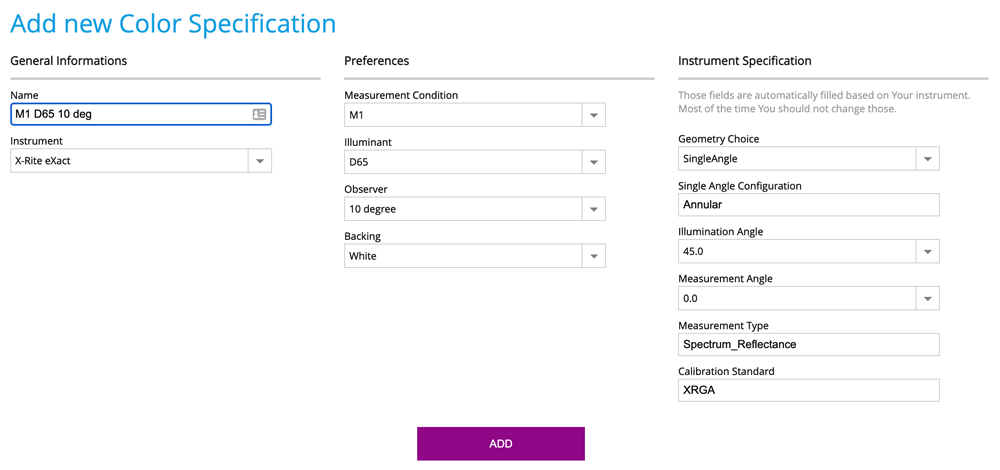
In ChromaChecker, a Color Specification defines the following measurement conditions:
- Illuminant — D50, D65, A, or custom
- Observer — 2° (standard for print) or 10° (paints, plastics, textiles)
- M-Condition — how UV/fluorescence is handled (M0, M1, M2, M3)
- Instrument Geometry — 45/0°, 0/45°, or spherical (di:8° / de:8°)
- Aperture — measurement spot size
- Backing — white, black, or self-backing per ISO
M-Conditions (Print Industry)
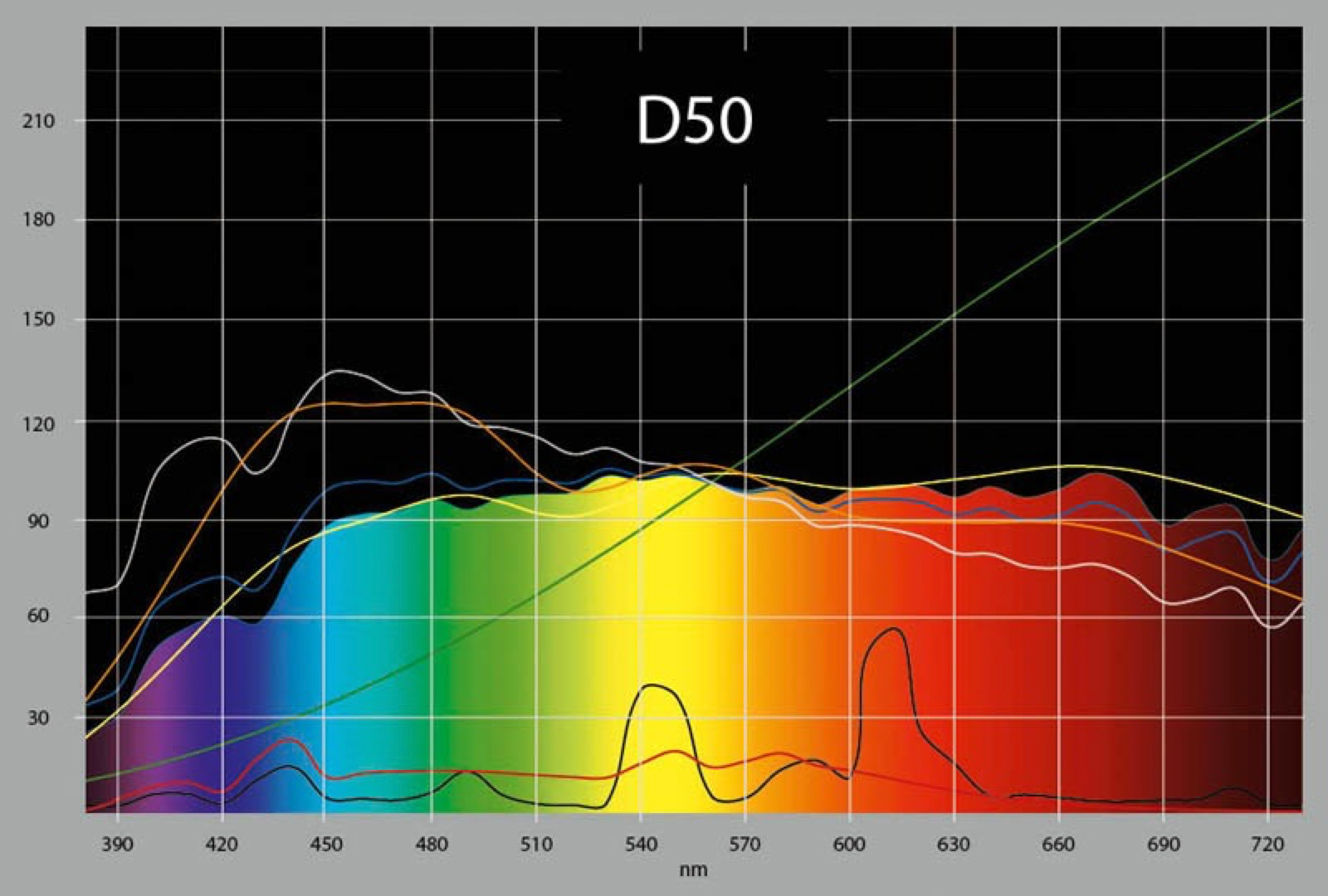
M-conditions per ISO 13655:2017 define how the instrument handles UV energy, which activates optical brightening agents (OBAs) in paper. Using the wrong M-condition on OBA-containing substrates can produce L*a*b* values that differ significantly from what the eye sees under daylight.
| Condition | UV Treatment | When to Use |
|---|---|---|
| M0 | No UV filter — simulates Standard Illuminant A (tungsten) | Legacy workflow compatibility; avoid for OBA substrates |
| M1 | Simulates D50 daylight including UV component | Recommended default for most print workflows; required when substrate contains OBAs |
| M2 | UV-cut filter eliminates OBA fluorescence | When OBA contribution should be excluded from measurement |
| M3 | UV-cut + polarisation filter | Process control on high-gloss or wet ink; not for color management references |
Print vs. Other Industries
The graphic arts industry standardizes on D50 / 2° (ISO 13655). Paints, plastics, and textiles typically use D65 / 10° with larger apertures and less precise UV specifications. When comparing color data between industries, always verify that both datasets use the same Color Specification — numbers measured under different conditions are not directly comparable.