Methodology

The 5-Step Color
Conformance Process.

A systematic approach to color quality control in printing — how industry leaders maintain customer retention through consistent color management across production runs, devices, and platforms.

Originally a Summer 2022 webinar series  ·  Now an evergreen reference

Overview

A systematic approach to color quality.

The framework helps industry leaders maintain customer retention through consistent color management across production runs. Each step builds on the previous one — skip a step and the rest fight you on every job.

Watch the Introduction
For

Printers, brand owners, color teams

Anyone responsible for keeping color consistent across a real production environment — across devices, shifts, and supplier networks.

Why

Customer retention through quality

Color disputes, reprints, and silent quality drift cost more than they look. Systematic conformance is the cheapest insurance you can buy.

How

Five steps, in this exact order

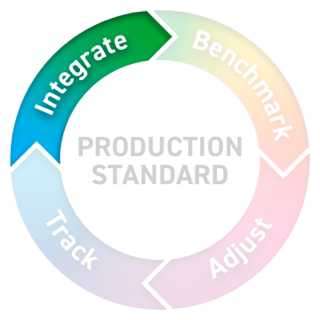
The order matters. Standards before benchmarks; benchmarks before adjustments; adjustments before tracking; tracking before integrating new equipment.

The Process

Five steps to color conformance.

Without standards, there are no problems — and no improvements either. The five-step process gives you a defined target, a way to measure against it, and a discipline for keeping the gap small.
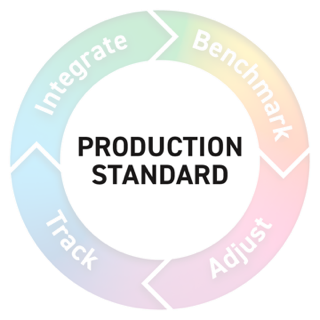
Step 01 — Defining production standards
Step 01 · Define Methodology

Defining production standards

“Without standards, there are no problems.” Establishing documented internal production standards eliminates operational gaps between teams and departments. This foundational step enables consistent output and identifies issues before ink ever transfers to substrate.

Watch Step 01
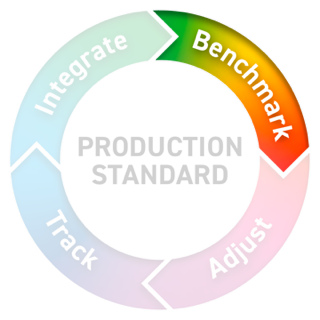
Step 02 — Benchmarking printing devices
Step 02 · Benchmark Methodology

Benchmarking printing devices

Understand what constitutes normal performance for each printer. This baseline becomes the common reference point that lets multiple printing platforms achieve consistent end-to-end color accuracy. Without it, every press is graded on a different curve.

Watch Step 02
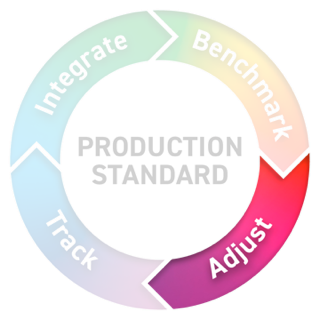
Step 03 — Determining correct adjustments
Step 03 · Adjust Methodology

Determining correct adjustments

Root cause first, blame never. This step quickly identifies underlying issues and determines the right correction — whether a G7 curve adjustment, an ICC profile modification, or a process change. ChromaChecker generates the profiles directly, applicable across various workflows.

Watch Step 03
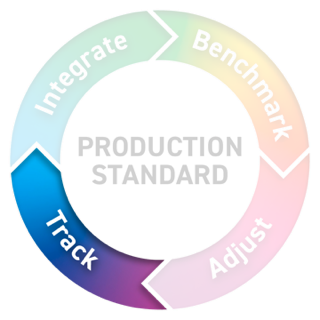
Step 04 — Tracking printing devices
Step 04 · Track Methodology

Tracking printing devices

Predictive maintenance for color. Monitoring secondary variables enables teams to anticipate and correct problems before they escalate into costly emergencies — before the substrate gets thrown away, before the customer call-back happens.

Watch Step 04
Step 05 — Integration of new printing devices
Step 05 · Integrate Methodology

Integration of new printing devices

New equipment doesn’t mean starting from zero. Existing standards apply to the new device, alignment capability is assessed, and the new press is integrated into the production workflow without disrupting what already works.

Watch Step 05

Bonus Sessions

Beyond the five steps.

Companion sessions that complement the core process — paper as a fifth color, G7 optimization, vendor accountability, manager-level QA, and how to score color objectively.

Bonus 01 Companion Session

Paper — the fifth color

Substrate is not a passive carrier. Every paper has its own color, brightness, gloss, and absorbency — and every change in substrate is a change in the color you see. Treat paper as a fifth color in your process, not as a constant.

Watch session
Bonus 02 Companion Session

G7 Optimization

Where G7 fits inside the 5-step process, how to apply curves correctly, and how to recognize when G7 is the right tool versus when an ICC profile change is the better answer.

Watch session
Bonus 03 Companion Session

Digital Press Vendor Accountability

How to hold press vendors accountable for color performance using objective measurement data — instead of relying on vendor-provided demo conditions or subjective acceptance.

Watch session
Bonus 04 Companion Session

Print Manager Quality Assurance

QA from the manager perspective — what to look at on a dashboard, when to intervene, and how to translate measurement data into operational decisions teams will actually act on.

Watch session
Bonus 05 Companion Session

Objective Scorecard Systems

Building a color quality scorecard that everyone — operators, managers, customers — can read the same way. Objective metrics, agreed-on thresholds, transparent reporting.

Watch session

Walkthrough & Consultation

See the process in action.

For a demonstration, detailed walkthrough, or private consultation about how the 5-step process applies to your specific operation, contact David Hunter directly. The session is free, the conversation is concrete, and the next step is up to you.

📧 david@chromachecker.com
📞 651.238.3260
🤝 Demo · consultation · review

Most useful for production leaders, color managers, and quality teams sizing up where their current process actually stands.

Ready to put the process to work?

Try ChromaChecker free for 30 days — measure, analyze, and apply the 5-step process to your own production.

Start Free — 30 days
Peter · AI Assistant
Want to see how the 5-step process maps to your specific workflow? I can walk you through it.