Precision vs. Accuracy
ChromaChecker evaluates both precision and accuracy on every measurement. They are equally important — but precision must come first.
The Two Metrics

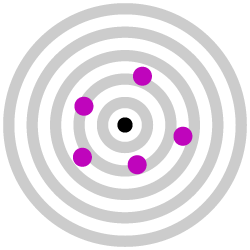


Precision — Three Dimensions
ChromaChecker evaluates press precision across three dimensions using control strip data:
- Intra-page variation — consistency within a single sheet (e.g. left to right across the press)
- Inter-page variation — consistency sheet to sheet within a single job run
- Reproducibility — consistency across different jobs, over days, weeks, and months
Precision is established through the E-Factor exercise and benchmarking procedures, which define the tolerance baseline for each press.

Accuracy — Matching the Reference
Once precision is established, accuracy is achieved by bringing the press average toward the target condition. ChromaChecker supports this through:
- G7 curves — for ISO/G7 offset and digital production workflows
- ICC profiles — created from CC-400 or CC-400 RGB test charts, optimized via Print Condition Qualifier
- Tolerance Sets — configured per Inspector, defining acceptable deviation from the target for pass/fail evaluation
Substrate as the Fifth Color
Substrate selection significantly influences both precision and accuracy. Paper functions as the fifth color in four-color printing — its whiteness, optical brightening agents (OBAs), gloss, and surface texture all affect measured color values.
ChromaChecker’s Substrate Inspector allows you to characterize and track substrates, ensuring that substrate variation is identified as a separate variable from press performance.